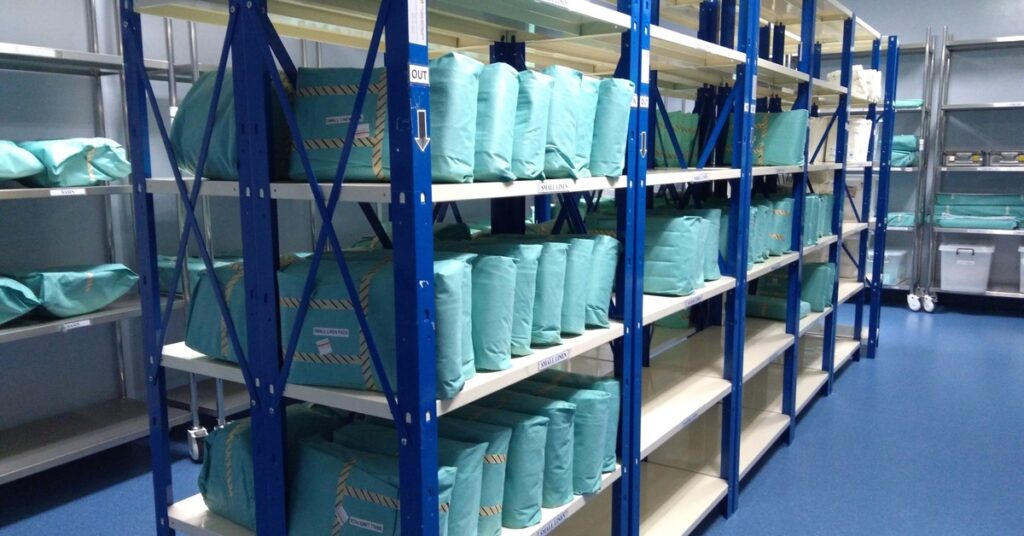
Package validation stands as one of the most critical aspects of medical device reprocessing. Device manufacturers use accelerated aging and real-time package validation tests to evaluate the shelf-life of their reusable medical device packaging after reprocessing.
These tests play a critical role in validation strategy, timeline, and budget; choosing the right one helps you bring your product to market as efficiently as possible. Learn more about both types of packaging validation and see how you can choose the right testing process for your product with this guide.
The Importance of Package Validation in Medical Device Reprocessing
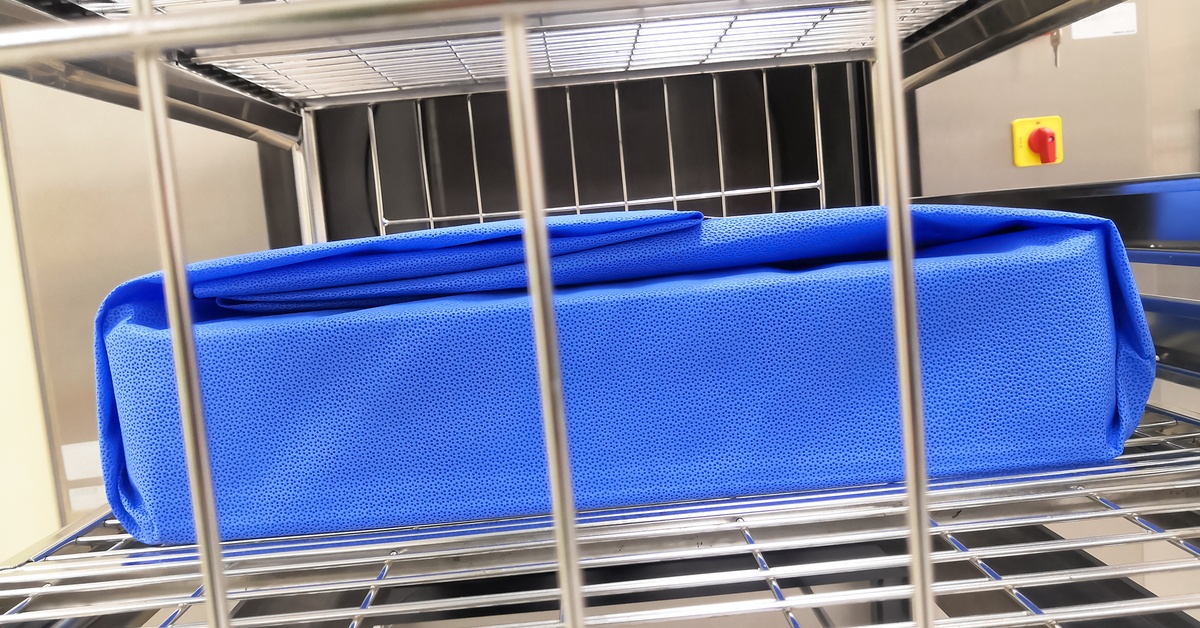
The stakes couldn’t be higher when it comes to medical device packaging validation. A single packaging failure can compromise sterility, leading to serious patient safety risks and potential regulatory consequences.
The packaging system serves as the final barrier protecting your sterilized devices from contamination during storage and handling. This protective barrier must withstand various environmental stresses, from temperature fluctuations to humidity changes, while maintaining its seal integrity over time. Package validation ensures that your medical device packaging maintains its protective properties throughout the device’s intended shelf life.
The reprocessing environment presents unique challenges for packaging systems. Sterilization processes expose packaging to extreme conditions, including high temperatures, chemical sterilants, and pressure changes. These conditions can degrade materials over time, potentially compromising seal integrity or material strength. Understanding how your packaging responds to these stresses over extended periods becomes essential for maintaining device safety and regulatory compliance.
Understanding Accelerated Aging
Accelerated aging simulates the effects of long-term storage by exposing packaging to elevated temperatures for shorter time periods. This approach relies on the principle that chemical reactions and material degradation processes occur faster at higher temperatures, humidity levels, and pressure levels. By carefully controlling these conditions, researchers can compress months or years of aging into weeks or days while maintaining the same degradation mechanisms.
Accelerated aging offers significant advantages for product development timelines. Instead of waiting months or years to validate packaging performance, you can generate equivalent data in weeks. This speed advantage proves particularly valuable during product development phases when multiple packaging configurations require evaluation. The ability to quickly iterate through different packaging options accelerates the overall development process and reduces time to market.
Cost-effectiveness represents another major benefit of accelerated aging. Shorter testing periods require fewer resources, less storage space, and reduced personnel time. Laboratory equipment utilization becomes more efficient when tests are completed in weeks rather than months. These cost savings can be substantial, particularly for companies developing multiple products simultaneously or those with limited testing facility capacity.
SL-ACCEL Package Validation Testing
SL-ACCEL testing represents a standardized approach to accelerated aging for medical device packaging. This test method exposes packaging samples to controlled elevated temperatures and can also include pressure change levels while maintaining specific humidity conditions. The test protocol carefully monitors temperature stability to ensure consistent aging conditions throughout the testing period. Precise environmental control ensures that degradation mechanisms remain consistent with real-world aging processes.
Real-Time Package Validation Methods
Real-time package validation involves storing packaging samples under actual intended storage conditions for the full duration of the proposed post processing shelf life. This approach provides the most accurate representation of how packaging will perform throughout its intended lifespan. Real-time shelf-life validation eliminates the need for mathematical modeling or acceleration factors, providing direct evidence of packaging performance under actual simulated use conditions.
The primary advantage of real-time shelf-life validation lies in its accuracy and regulatory acceptance. Regulatory agencies often prefer real-time data because it eliminates uncertainties associated with acceleration models. The US FDA, for instance, requires real-time shelf-life testing for packaging system approvals, such as sterilization pouches, sterilization wraps, and rigid container systems. Real-time shelf-life testing accounts for all environmental variables that might affect packaging performance, including unexpected temperature fluctuations, seasonal variations, and long-term material behavior that might not manifest in accelerated conditions.
However, real-time validation presents significant challenges in terms of timeline and resource requirements. Testing periods can extend for months or years, depending on the proposed shelf life. This extended timeline can delay product launches and tie up valuable testing resources for extended periods. The long testing duration also increases the risk of sample loss due to accidental damage or equipment failures.
Proper real-time shelf-life studies are tailored to the intended sterilization process. Below are the most common real-life packaging validation studies.
SL-STEAM Testing
SL-STEAM testing evaluates packaging performance following exposure to steam sterilization cycles. This test method subjects packaging samples to full steam sterilization cycles under simulated use conditions. Once processed, the samples are stored under simulated use conditions as would be seen in a hospital central processing dept. The external bioburden around the stored samples is monitored weekly and the samples handled to simulate FIFO conditions in a hospital setting. All results are recorded.
The high temperature and moisture conditions of steam sterilization can significantly stress packaging materials, particularly heat-sensitive polymers and adhesive systems. Therefore, the samples are visually inspected each week that the samples are stored under simulated use conditions. Understanding how packaging responds to steam exposure becomes critical for devices intended for terminal storage of reusable medical devices.
SL-STERRAD Testing
SL-STERRAD testing focuses on packaging compatibility with hydrogen peroxide plasma sterilization systems manufactured by Advanced Sterilization Products (ASP). This low-temperature sterilization method uses hydrogen peroxide vapor and plasma generation to achieve sterilization while minimizing thermal stress on packaging materials. However, the chemical nature of hydrogen peroxide can interact with certain packaging materials in unexpected ways, making specific validation testing essential. The packaging samples are exposed to the most lethal (robust) STERRAD cycle and placed in storage like the samples described in the SL-STEAM tests listed above. The US FDA requires a minimum of 30 days of real-time shelf-life storage for packaging systems looking to achieve an FDA 510(k) clearance.
SL-VPRO Testing
SL-VPRO testing evaluates packaging performance with low-temperature hydrogen peroxide sterilization systems from STERIS that operate without plasma generation. This sterilization method relies solely on hydrogen peroxide vapor diffusion and chemical sterilization activity. The absence of plasma generation creates different material stress patterns compared to plasma-based systems, requiring specific validation approaches.
SL-VPRO testing typically involves extended exposure periods to ensure adequate sterilant penetration and contact time. The longer exposure duration in their most lethal cycle can reveal material compatibility issues that might not appear with shorter sterilization cycles.
Typical shelf-life periods chosen to be validated by the device manufacturer are 6 months, 12 months, 24 months and even 36 months and longer. All real-life shelf-life studies include sterility testing at the end of the chosen shelf-life period to verify sterilization efficacy of the packaging contents, alongside packaging integrity assessment.
SL-ETO Testing
SL-ETO testing addresses packaging compatibility with ethylene oxide sterilization processes. Ethylene oxide presents unique challenges for packaging validation due to its penetrating nature and potential for material absorption. The sterilization process requires materials that allow sterilant penetration while preventing toxic residue retention. Post-sterilization aeration becomes critical for removing absorbed ethylene oxide from packaging materials. Typical aeration times are 8-12 hours or even longer.
Comparative Analysis: Accelerated Aging vs. Real-Time Validation

Real-time shelf-life testing provides definitive evidence of packaging performance under actual simulated use storage conditions, eliminating uncertainties associated with acceleration models. However, accelerated aging can achieve comparable accuracy when properly designed and validated, particularly for well-understood material systems and degradation mechanisms.
Cost considerations often drive the choice between accelerated aging and real-time shelf-life package validation approaches. Accelerated aging typically offers significant cost advantages through reduced testing duration and resource requirements. However, real-time testing may prove more cost-effective for products with short shelf lives or when regulatory requirements strongly favor real-time data. The total cost calculation must include both direct testing costs and potential market delay costs.
Timeline requirements frequently determine the feasibility of different validation approaches. Product development schedules may not accommodate extended real-time shelf-life testing periods, making accelerated aging a viable option for meeting launch targets. Conversely, regulatory submission strategies may require real-time data for certain product categories, necessitating early initiation of real-time studies regardless of timeline pressures.
Savvy device manufacturers perform both accelerated aging and real-time shelf-life package validation on their products. This allows a device manufacturer to start a real-time shelf-life packaging validation and an accelerated aging packaging validation concurrently and submit for a regulatory clearance prior to the real-time study being complete. When the accelerated aging study is over (with favorable passing results), the data is submitted to regulatory authorities, along with the protocol from the real-time shelf-life study and a commitment to forward those results once available. This method allows the process of regulatory clearance to begin while the clock is ticking away toward the end of the real-time shelf-life study.
Choosing the Right Validation Partners for Your Success
Package validation represents a critical investment in medical device safety and regulatory compliance. Choose an approach that ensures a smooth process as you bring your product to market by partnering with the packaging system experts at Highpower. Talk to our team about our medical device validation services, and see how our packaging validation and other tests can help you achieve compliance with your products.