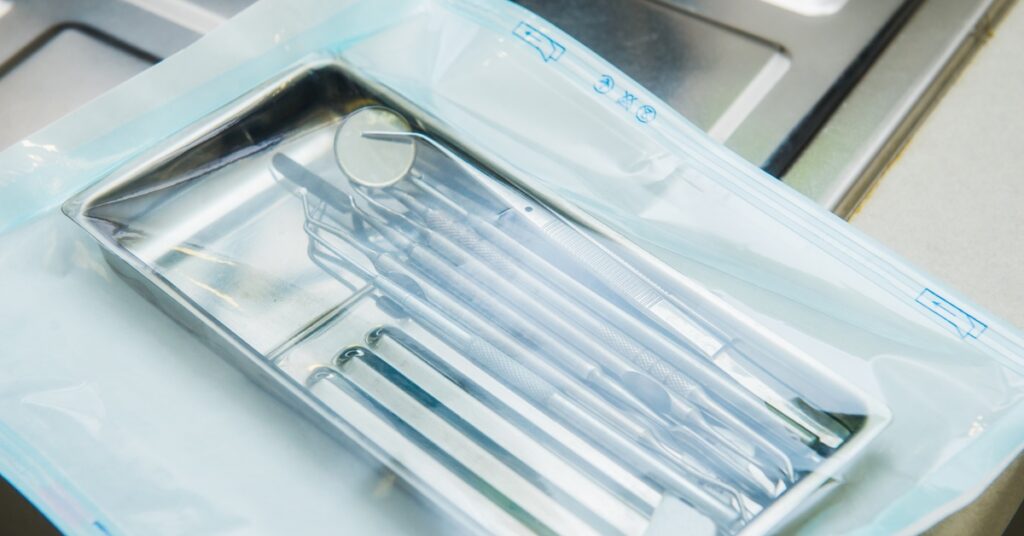
Sterility testing for reusable medical devices stands as a core element of modern health care. The safety of patients hinges on the rigorous assurance that every device, whether used in surgery or daily procedures, undergoes thorough, effective reprocessing.
Stubborn pathogens and stealthy biofilms present increasing challenges, especially as device complexity grows. This blog explores approaches in sterility testing for medical devices, breaking down old and new methodologies, highlighting promising technologies, and underscoring the role of validation expertise in safeguarding patients.
Introduction to Reusable Medical Device Sterility Testing

Reusable medical devices transform patient care, drive efficiency, and reduce long-term costs. Unlike single-use products, the devices undergo repeated decontamination between uses. Every step in the reprocessing cycle, from the initial point-of-use cleaning to the final sterilization, must ensure that the device is safe for the next patient.
Sterilization methods play a huge role in this process. Therefore, sterilization testing and validation are crucial for a successful reprocessing procedure. Successful sterilization testing verifies that the reusable medical device’s intended sterilization method adequately removes harmful microorganisms and makes the device safe for reuse.
Current Testing Practices
Current testing practices for reusable devices have been accepted by regulatory agencies for decades, but they can have some limitations, especially as devices become more intricate in their designs. Culture-based tests can miss fastidious organisms or microbes present in very low numbers. The process is time-consuming, often requiring a week or more before conclusive results emerge. This lengthy waiting period can impact and delay the clearance of critical devices. This is why validating the culture medium used in a study for its ability to detect low numbers of surviving organisms is critical. This validation is part of all tests performed in our lab at Highpower.
False negatives can arise due to residual disinfectants or inadequate sample handling. Therefore, it’s important for life science labs to perform bacteriostasis and fungistasis testing to rule this out. Devices with narrow lumens, textured surfaces, or multiple assembly points may shield microorganisms from effective recovery during standard rinse or immersion tests.
Biofilm-forming bacteria further complicate matters, as these communities become highly resistant to both sterilization procedures and recovery by culture. There is a growing awareness that sterility tests alone may no longer provide adequate assurance for all device types.
Emerging Technologies in Sterility Testing
To address the limitations of some classic methods, several innovative technologies are advancing the field of sterility testing. Rapid microbial detection systems use technologies such as ATP bioluminescence, flow cytometry, and nucleic acid amplification to deliver results within hours rather than days. These methods detect broader categories of microbial contaminants, identify live but nonculturable organisms, and quantify contamination precisely.
Polymerase chain reaction (PCR) is a sensitive tool for detecting bacterial and fungal DNA on or in devices. PCR-based assays identify specific pathogens faster than traditional culture methods.
Biosensors and microfluidic devices are also gaining traction in the laboratory environment. These tools can identify trace amounts of microbial metabolites or proteins, delivering sensitive and specific detection in complex samples. Advances in imaging technologies offer ways to visualize and map biofilm presence and viability on device surfaces without destroying the device, providing new insights into sterilization effectiveness.
Advanced Testing Methodologies: Pros and Cons
Advanced sterility testing methodologies can provide benefits for sterility release criteria when compared to traditional approaches. Rapid turnaround accelerates the detection of contamination, supporting faster decision-making and enabling quicker device turnaround.
However, each innovation includes its own set of challenges. Non-culture-based tests may detect nonviable genetic fragments, yielding positive results even when the organism is not alive and potentially leading to unnecessary process changes or rework. The sensitivity of molecular methods can make laboratories susceptible to false positives from environmental contamination or trace DNA left by reprocessing chemicals. These tests generally require technical expertise, specialized equipment, and rigorous control of laboratory conditions.
Cost also plays a role in decision-making. While rapid detection platforms and molecular diagnostics promise efficiency gains, they involve significant investment in equipment, validation, and staff training. Not all facilities have the resources to implement the latest technologies across all device types, and some regulatory authorities have yet to publish clear guidelines for advanced methods, complicating full adoption.
Future Trends and Innovations in Sterility Testing
Although sterility testing and methodologies are advancing, they are seeing limited use in healthcare facilities. The use of newer technologies is more common in life science laboratories, industrial producers of single-use medical items, and some individual countries where the results of these tests are accepted by their regulatory authorities.
Sterility testing will continue to evolve rapidly. The integration of artificial intelligence with data from rapid detection devices enables real-time analysis and predictive modeling for contamination control. Automated, closed-loop testing platforms not only minimize human error but can also boost throughput in high-volume processing environments. Scientists are developing multiplexed assays, which screen for multiple pathogens or biomarkers in a single test. This streamlining reduces resource use without sacrificing sensitivity.
Researchers are also exploring next-generation sequencing to characterize microbial populations on medical devices at a granular level. These insights may reveal emerging threats or subclinical biofilm populations that evade current technology. Over time, expect even greater collaboration between device designers, microbiologists, and engineers to create materials that resist microbial adherence or even sterilize themselves.
Alongside these innovations, cloud-based data management and remote monitoring will transform how quality teams track and respond to sterility metrics. This will improve both accountability and traceability in device reprocessing.
Regulatory Landscape and Guidelines

Sterility assurance functions in a highly regulated environment. Governing bodies rigorously define acceptable testing strategies, incubation times, and process validation requirements. Recent years have seen periodic updates to guidance documents in response to technological advancements and outbreak events. Laboratories and manufacturers need to remain nimble, anticipating new requirements for proof of sterility, especially when integrating rapid or molecular-based technologies into their protocols.
To maintain compliance, laboratories must verify and validate any new method to guarantee it meets or exceeds the performance of current gold-standard practices. Regulatory agencies emphasize robust risk analysis, method suitability, and reproducibility across real-world reprocessing conditions. Documentation and traceability form essential pillars of any compliant program, requiring clear alignment between validation results and ongoing operational control.
The Importance of a Professional Validation Team
Given the technical complexities involved in advanced sterility testing, the value of experience cannot be overstated. Professional validation teams bring a deep understanding of both laboratory science and regulatory expectations. They design robust studies, select appropriate recovery techniques, and implement clear controls to minimize false readings.
Highpower Validation brings experience and expertise to every medical device sterility test validation we perform. Learn more about our approaches to medical device sterility testing and see how we can help you bring your device to market today.