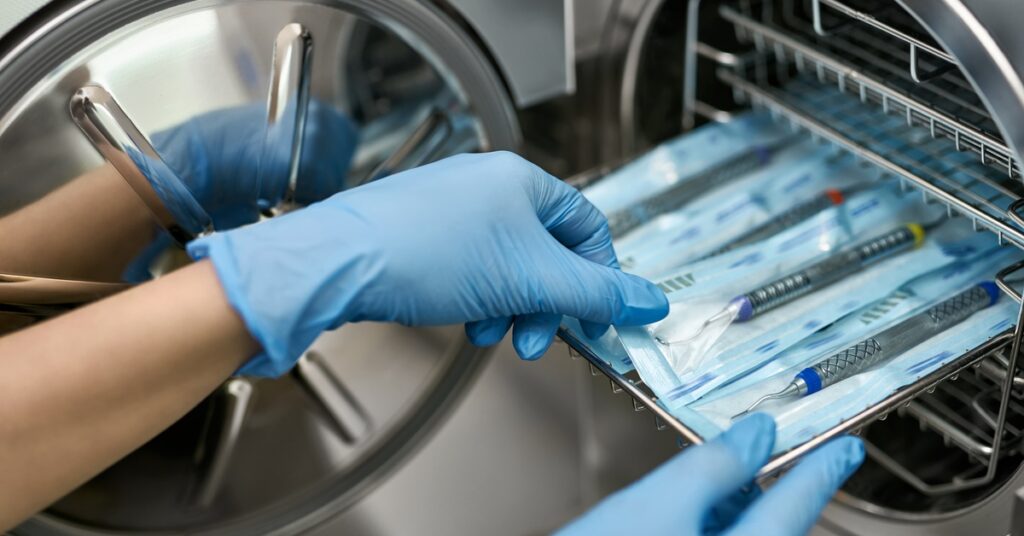
A steam sterilizer may seem straightforward: load the chamber, run the cycle, and remove the devices when processing is complete. In practice, though, not every instrument or supply is processed the same way. The differences between steam sterilization cycles affect how air is removed, how long devices are exposed to steam, and how the load is handled afterward. A closer look at those variables gives manufacturers a clearer picture of what to consider during validation.
Air Removal Method
Before steam can effectively contact device surfaces, air must be removed or displaced from the sterilizer chamber and load. Gravity displacement and prevacuum cycles use different methods to create the conditions needed for steam exposure.
Gravity Displacement Cycles
In a gravity displacement cycle, incoming steam pushes cooler air downward and out through the chamber drain. The process relies on the density difference between steam and air rather than on an active vacuum system. Gravity cycles may be suitable for certain loads when the device configuration and manufacturer instructions support their use. More complex devices may require additional consideration because trapped air can prevent steam from reaching internal or hard-to-access areas.
Prevacuum Steam Cycles
Prevacuum cycles use a vacuum system to remove air from the chamber before the primary steam exposure phase begins. This can improve steam penetration into wrapped, porous, or more complex loads. The conditioning phase may include several changes in pressure and vacuum before exposure starts.
Steam Flush Pressure Pulse Cycles (SFPP)
In steam-flush pressure-pulse steam sterilizers, the cycle depends on a repeated sequence consisting of a steam flush and a pressure pulse to remove air from the sterilizing chamber and processed materials. Air removal is achieved with the sterilizing chamber pressure at above atmospheric pressure (no vacuum is required to remove for sterilization).
Temperature and Exposure Time
Temperature and exposure time work together, but the exact combination can differ between steam sterilization cycles. Some cycles use a higher temperature for a shorter exposure period, while others operate at a lower temperature for longer. These differences reflect the conditions needed to expose the device and load to saturated steam for the specified period.
The selected parameters can affect more than the length of the sterilization phase. Device materials, construction, packaging, and load configuration may influence which temperature and exposure conditions are appropriate for a particular process. Manufacturers need to consider these factors when defining cycle parameters that will be evaluated during sterilization validation.
Load Configuration and Packaging
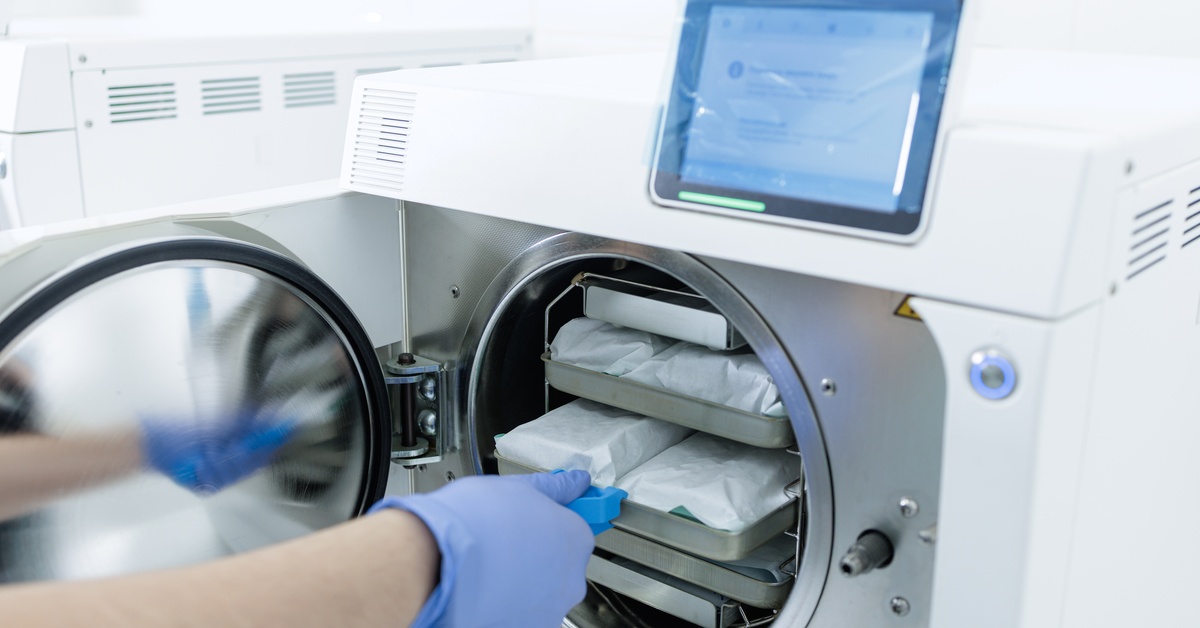
How devices are arranged and contained within the sterilizer can affect air removal, steam contact, and drying. A tightly packed tray creates conditions different from those of a more open load, while packaging introduces another layer between the steam and the device. For validation, the load setup should reflect the configuration described in the manufacturer’s reprocessing instructions.
Load Arrangement
Load density and device placement can influence how steam moves through the chamber and reaches different surfaces. Instruments that are nested, stacked, or closely positioned may present a greater challenge than devices arranged more openly. The orientation of components can also affect where air or moisture becomes trapped during processing.
Packaging and Containment Systems
Packaging materials and containment systems can also change how a steam cycle performs. Wraps, pouches, trays, and other systems may influence air removal, steam penetration, and drying behavior. Their design and material properties can affect how readily steam reaches the device during the cycle. Because of this, packaging should be evaluated as part of the complete reprocessing configuration.
Device Design and Compatibility
The device itself can shape which steam cycle conditions require closer evaluation. Internal spaces, joints, assembled components, and material properties may all affect how readily steam reaches critical areas. For reusable devices, medical device sterility testing can provide data that documents the performance of a defined sterilization process.
Device characteristics that may affect cycle selection include:
- narrow or internal lumens
- hinges and moving joints
- mated or contacting surfaces
- device mass and density
- heat-sensitive materials
- complex assembled components
Wrapped Versus Unwrapped Loads
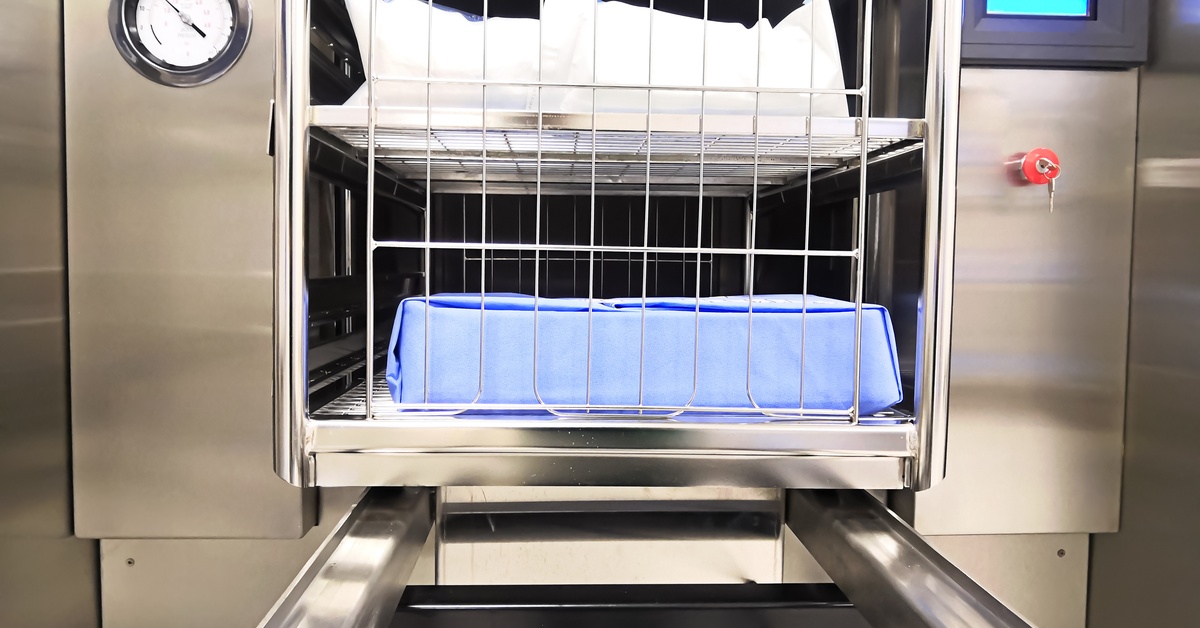
Wrapping changes the conditions steam encounters before it reaches a reusable device. A sterile barrier or other packaging material can affect air removal, steam penetration, and moisture movement during the cycle. As a result, a process evaluated with an unwrapped device shouldn’t be assumed to perform the same way with a wrapped load.
Wrapped devices also need to complete the cycle under conditions that support their intended handling and storage. The packaging configuration used during validation should match the one specified in the reprocessing instructions. If wrapping materials or containment systems change, manufacturers may need to assess whether the existing validation still applies.
Drying Time Requirements
Drying is a separate phase of many steam sterilization cycles, and its requirements can vary with the load, packaging, sterilizer, and cycle settings. Heavy trays or dense configurations may retain moisture longer than lighter, more open loads. This means a cycle can have an appropriate exposure phase while still presenting drying concerns. The same applies with mixed loads containing porous and non-porous devices.
Device geometry can make those differences more noticeable. Lumens, recessed areas, and contacting surfaces may hold moisture longer than simple, exposed surfaces. Drying should therefore be evaluated as part of the complete cycle rather than treated as an afterthought.
Sterilizer and Load Considerations
The same general type of steam cycle may perform differently depending on the sterilizer and how the load is prepared. Chamber size, capacity, equipment characteristics, and cycle programming can all influence processing conditions. Manufacturers should define the equipment and operating conditions that are relevant to their reprocessing instructions.
Load size and placement can introduce additional variables. A lightly loaded chamber may not create the same challenge as a densely configured tray or larger load. Using representative or appropriately challenging conditions during validation provides a stronger basis for evaluating the specified process.
Selecting a Steam Cycle
Steam cycle selection starts with the device and the conditions under which it will be reprocessed. Materials and design features need to be considered alongside packaging and the sterilizer settings available in the intended health care environment. Choosing a cycle based only on temperature or total cycle time can leave important variables unaddressed.
The selected cycle should also be described clearly in the manufacturer’s reprocessing instructions. Validation can then evaluate those defined parameters under conditions that reflect the intended process. This creates a clearer connection between device design, cycle selection, testing, and the final instructions provided to users.
A steam sterilization process should be evaluated as part of the device’s broader reprocessing pathway. Each validation decision contributes to how clearly the final instructions describe the conditions users are expected to follow. When those conditions are well defined, manufacturers can document the process with greater consistency and fewer assumptions. That creates a stronger foundation for future testing, updates, and regulatory review.